Стратегии слияния (compaction strategies) в LSM-деревьях
0. Title
Стратегии слияния (compaction strategies) в LSM-деревьях
За пределами Leveled и Tiered
Константин Осипов — C++ Russia, 17 мая 2026
Today’s topic is LSM compaction — not as a Vinyl-specific subject, but as a general design problem any LSM engine faces. I’ll use Cassandra, RocksDB, and Vinyl as concrete examples, and close with a proposal for what the next generation of LSM file formats should look like.
1. Общий вид LSM-дерева
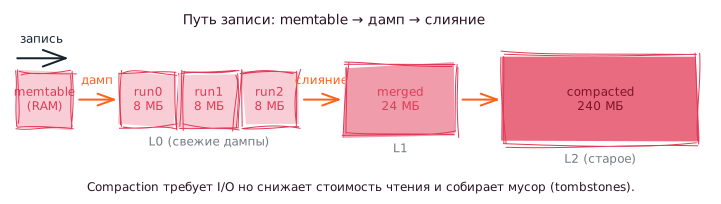
Quick recap. Writes land in an in-memory memtable. When it fills up, it is frozen and flushed to disk as a sorted immutable file — an SSTable in Cassandra, an SST in RocksDB, a run-file in Vinyl. Reads must consult the memtable and every on-disk file, so over time the engine compacts files together: it merges several sorted files into one larger sorted file, collapsing updates and dropping tombstones. Compaction is where almost all of the engineering happens.
2. Size-Tiered Compaction (STCS)
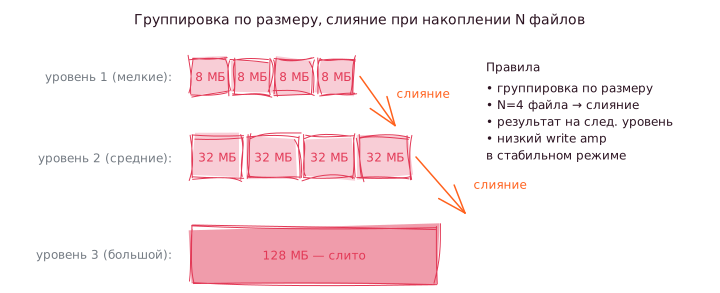
- Файлы одного размера складываются в уровень
- При накоплении N (по умолчанию 4) — слияние в один файл
- Результат становится файлом следующего уровня
STCS is the original Cassandra strategy and the simplest. It keeps a stack of size buckets — when enough files of the same size accumulate, they get merged and the result starts a new, bigger bucket. Write amplification is low because each byte is rewritten only when its tier fills.
3. Когда выбирать STCS
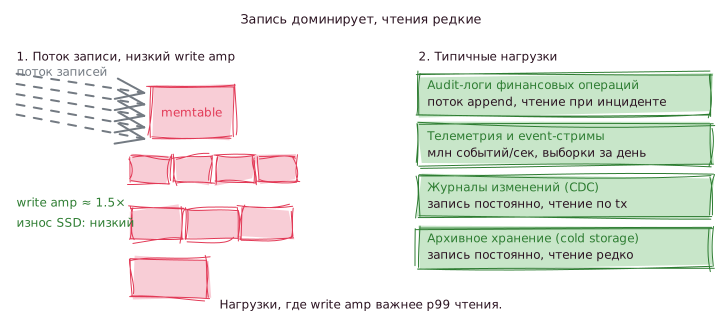
- Поток записи доминирует, чтения редкие
- Низкий write amp — сливаются только файлы одного размера
- Минимальный износ SSD
- Подходит для: audit-логи, event-стримы, CDC-журналы, архивное хранение
STCS earns its place in workloads where writes dominate and reads are rare or batched. Audit logs, event streams, CDC pipelines, archival storage — all want low write amp and tolerate high read amp because reads are uncommon or do scans rather than point lookups.
4. Недостатки STCS
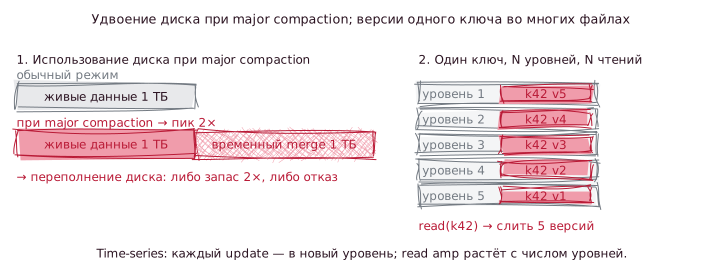
- Версии одного ключа разбросаны по N уровням → read amp растёт
- Размер SSTable ничем не ограничен (на нижнем уровне — сотни ГБ)
- Классический инцидент: «Cassandra переполнила диск при compaction»
The trouble surfaces at scale. Imagine a Cassandra cluster ingesting metrics — billions of writes per day, keys updated frequently. Each key’s versions end up scattered across many tiers. To read one row, the engine merges fragments from every tier — read amp grows unbounded.
The “ran out of disk” outage follows from one root cause: Cassandra SSTables have no size cap. There’s no
target_file_size_baseanalog like RocksDB’s 64 MB default. Under STCS, the bottom tier accumulates SSTables that grow without bound as the dataset ages — a year-old cluster routinely has individual SSTables in the hundreds of GB. Compaction cannot delete input SSTables until the output is fully written (durability), so for the duration of a compaction job both the inputs and the partial output sit on disk together. A major compaction of a 1 TB dataset literally needs 1 TB of free headroom. DataStax’s standard rule for STCS deployments is to keep at least 50% disk free — and that 50% figure is downstream of the unbounded SSTable size. LCS doesn’t have this problem because compactions touch one bounded-size file per level (headroom ≈ a few hundred MB). Vinyl caps it by range — major compaction of one range needs only 128 MB of headroom regardless of dataset size.A subtler weakness: STCS classifies files by their actual size, not by a level counter. If four 8 MB files compact down to one 8 MB file (heavy update/delete workload), the result sits in the same 8 MB bucket the inputs came from — no promotion. The tier can cycle indefinitely: flush, hit threshold, compact, end up back at the same size, repeat. Read amp at that tier never improves; the only way out is a major compaction. LCS doesn’t have this problem because output goes to L_n+1 by level number, not by resulting size.
Q someone in the audience will ask: doesn’t size-based placement break read ordering — couldn’t an old, shrunken file end up in a “newer” tier than a recent, bigger file, masking a tombstone? Answer: no, because no production engine actually places by size alone. Cassandra tags every cell with a timestamp and resolves conflicts by timestamp, so tier position is irrelevant for correctness. RocksDB Universal and Vinyl maintain a recency-ordered SSTable / run list — size buckets are used only to select which files to compact, never to decide where the output sits. LCS uses explicit level numbers. The size-bucket logic is a selection heuristic, not a placement rule.
5. Leveled Compaction (LCS)
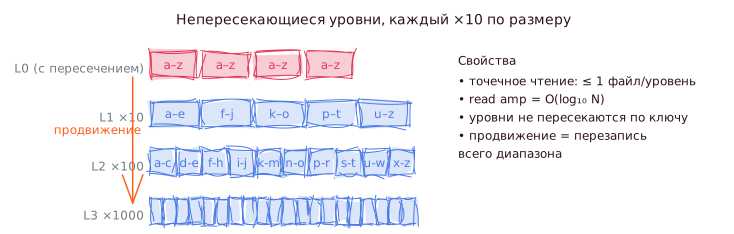
- Файлы организованы по уровням L0, L1, L2, …
- Каждый следующий уровень ≈ ×10 больше предыдущего
- Внутри уровня файлы не пересекаются по диапазону ключей
- Продвижение между уровнями = перезапись затронутого диапазона
LCS, originally LevelDB’s contribution, fixes the read-amp problem. Within each level, files cover disjoint key ranges — a point lookup consults at most one file per level. Read amplification is bounded by the number of levels, roughly log₁₀(dataset). Space amplification is also tight because each level holds exactly one copy of its key range.
6. Когда выбирать LCS
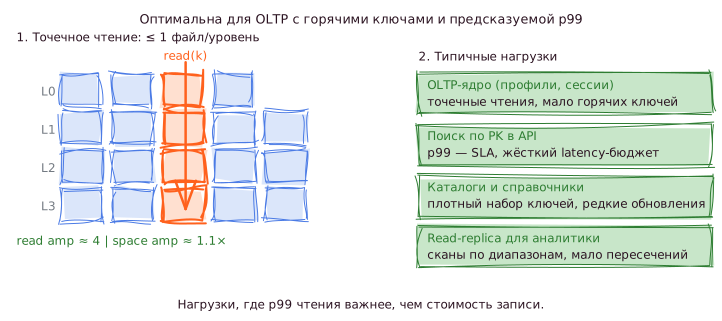
- OLTP с горячим набором ключей, точечные чтения по PK
- p99 чтения — продуктовый SLA
- read amp = O(log₁₀ N), space amp ≈ 1.1×
- Подходит для: профили, сессии, корзины, справочники, API-поиск по PK
LCS shines on read-heavy OLTP: profiles, sessions, shopping carts, API lookups by primary key. The bounded read amp and tight space amp translate directly into predictable p99 latency, which is what the product SLA usually measures. The cost — write amp — is acceptable because the workload is read-heavy by definition.
7. Недостатки LCS
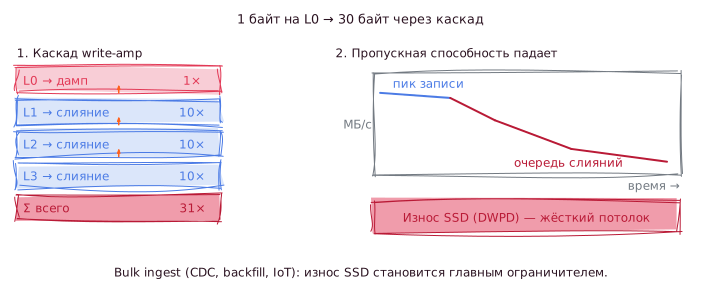
- 1 байт на L0 → ≈ 30 байт через каскад продвижений
- Износ SSD упирается в DWPD-потолок
- Bulk-ingest проседает: backfill, CDC, IoT, потоковая загрузка
The cost of bounded read amp is unbounded write amp. To keep levels non-overlapping, every promotion rewrites the touched range at the next level. With the default 10× ratio, one byte at L0 may be rewritten 10× at L1, 10× at L2, and so on. Total write amp is the sum: typically 20–30×. For bulk-ingest workloads — backfilling a year of metrics, loading a CDC stream, ingesting IoT events — write amp is the wall you hit. The SSD wears out, write quota drains, sustained throughput collapses to whatever the bottom level can absorb.
8. Треугольник RUM
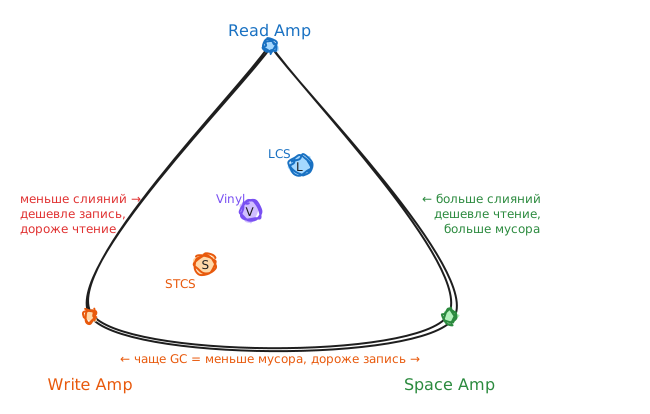
- Read amp — байт прочитано на байт запрошенных данных
- Write amp — байт записано на байт сохранённых данных
- Space amp — байт на диске на байт живых данных
Harvard’s DASlab framed it crisply: you cannot minimize all three. STCS optimizes write amp at the cost of read and space. LCS optimizes read and space at the cost of write. Every strategy is a point in this triangle — and the right point depends on the workload, not on a universal answer.
9. Compaction как проблема кластеризации
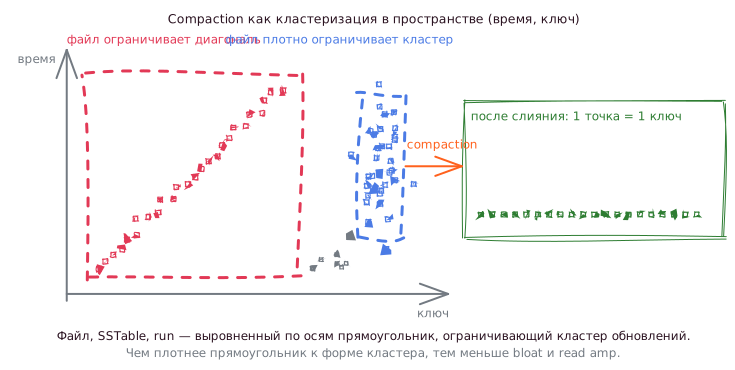
- Каждое обновление — точка в координатах (время, ключ)
- Естественные кластеры имеют произвольную форму: диагональные полосы (key-order sweep), плотные сгустки (горячие ключи OLTP), шум
- Файл / SSTable / run — это выровненный по осям прямоугольник, ограничивающий кластер
- Compaction = найти кластер и заменить его на «строку», где каждый ключ представлен один раз
Step back from the file-merging framing. Every write is a point in (time, key) space. The natural clusters that emerge — diagonal stripes from key-order sweeps, dense blobs from hot-key churn, scattered noise from random workloads — are arbitrarily shaped. Files, SSTables, runs, ranges are all axis-aligned rectangles trying to cover those clusters. That’s the whole story: every strategy I’ll describe next is a different way to choose those rectangles. Plan trimming, per-block metadata, file stitching — all of them are about making the rectangle cover the cluster more tightly.
10. Universal Compaction: компромисс
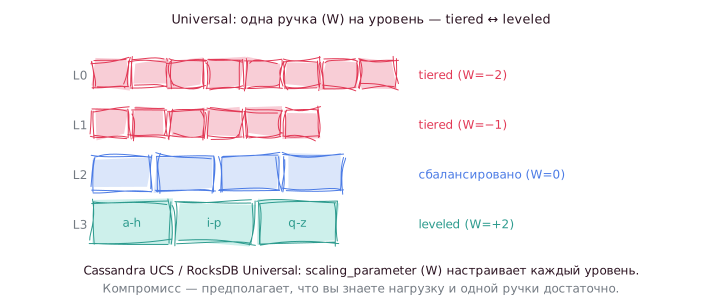
- Cassandra UCS (5.0) и RocksDB Universal объединяют STCS и LCS
- Параметр
scaling_parameter(W) задаёт поведение каждого уровня - Адаптируется к нагрузке — но остаётся компромиссом
Cassandra and RocksDB converged on the same idea: parameterize the strategy. UCS gives each level a knob — negative W behaves like tiered, positive like leveled. You can tune it, but tuning assumes you know the workload, that it doesn’t change, and that one knob is enough to describe it. In practice these assumptions are wrong, and even a well-tuned UCS leaves performance on the table compared to a strategy that observes the workload at runtime.
11. Vinyl: per-range, shape-based
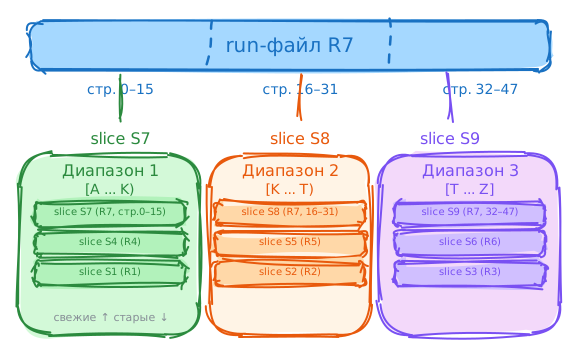
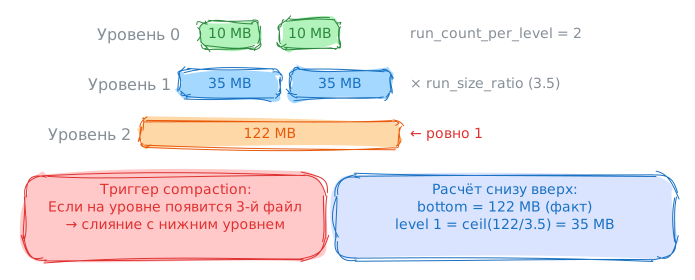
- Ключевое пространство разбито на независимые диапазоны (по умолчанию 128 МБ)
- У каждого диапазона своя «форма» LSM-дерева — пирамида run-файлов
- Run-файл может быть виден из нескольких диапазонов через slice-ссылки
Vinyl partitions the keyspace into ranges, each its own mini-LSM with its own shape and compaction decisions. Range size bounds the worst-case compaction cost: a major compaction of one 128 MB range needs only 128 MB of temporary space, no matter how big the dataset. Run-files can be shared across ranges via slices — a slice is a (file, start_page, end_page) tuple. A range split creates new slices, not new files.
12. Один и тот же датасет: Vinyl vs RocksDB
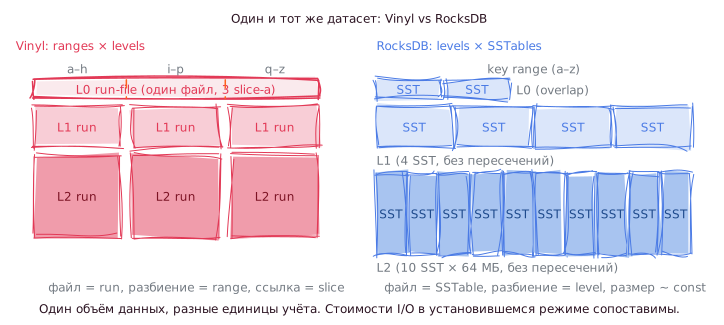
- Vinyl: разбиение по ключу (range), внутри каждого диапазона — пирамида run-файлов
- RocksDB: разбиение по уровню (LCS), на каждом уровне — набор SSTable фиксированного размера
- L0 в обоих движках — недавно сброшенные файлы; в Vinyl один run может покрывать несколько диапазонов через slice-ы
- Объёмы данных совпадают, единицы учёта разные
Same dataset, two different vocabularies. Vinyl partitions horizontally by key, then stacks levels per partition; RocksDB partitions vertically by level, then divides each level into fixed-size SSTables. The total data volume and steady-state I/O cost are comparable — the engineering difference is which axis you care about first when planning compaction. Vinyl’s per-range partitioning gives you cheap independent merges of hot regions; RocksDB’s per-level partitioning gives you simpler global reasoning about read amplification.
13. Bloat после разделения диапазона
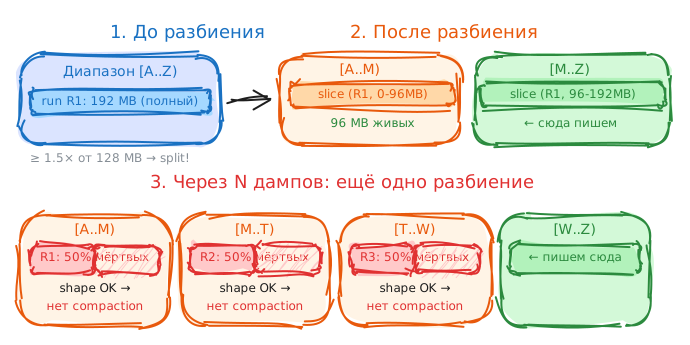
- Append-only вставки, затем split диапазона
- Нижняя половинка выглядит «идеально» — один большой run-файл
- Но 50% его данных уже устарели: page-index сидит в RAM зря
- Удаление старых строк превращается в квадратичный скан
The exact bug that triggered our scheduler rewrite. Time-series data appended in key order; the range grew past its threshold, split, and the lower half — never written to again — looked perfect to the shape-based scheduler. But half of its bytes were dead, copied across during the split. The page index sat in RAM for nothing. Worse, a delete-old scan from the cold end triggered quadratic behavior — each scan re-read all the tombstones the previous scans had created.
14. Усечение плана compaction
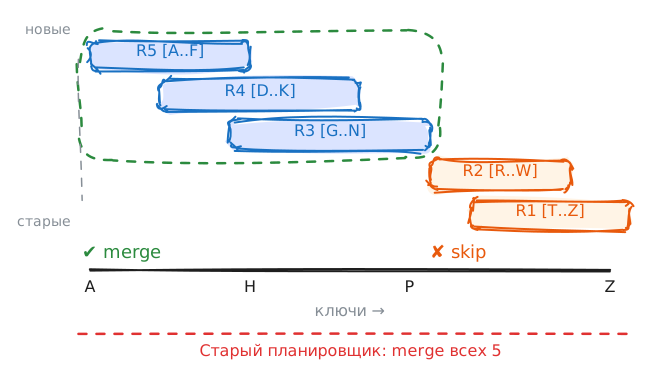
- Внутри диапазона ищем максимальный кластер run-файлов с пересекающимися ключами
- Сливаем только этот кластер
- Непересекающиеся run-файлы пропускаем — write amp экономится
The fix: don’t take the shape at face value. Within a range, find the maximal cluster of run-files that actually share key ranges, compact only that cluster. Non-overlapping runs — common in time-series, append-only, tenant-isolated workloads — get skipped entirely. The change required making the compaction plan a first-class object in the scheduler. Once you have a plan, you can have multiple drivers competing to fill it.
15. Read-amp драйвер
- Считаем mux на чтении: полезные байты ÷ просканированные байты
- Mux упал ниже порога — планируем compaction для этого диапазона
The second driver is feedback from reads. The shape-based driver looks at the file layout; the read-amp driver looks at what queries actually pay. When read efficiency drops — too many tombstones, too much dead data after a split — we compact the range even if its shape looks fine. This closes the feedback loop classical LSM schedulers lack. It also gracefully handles workloads the engine has no model for: if reads suffer, compaction kicks in.
16. File stitching: возможности файловых систем
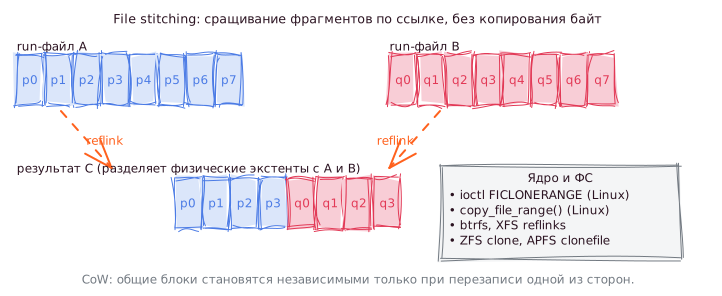
- Linux: ioctl
FICLONERANGE, syscallcopy_file_range - ФС с reflink: btrfs, XFS, ZFS, APFS
- Сращивание фрагмента файла в другой файл без копирования байт
- Результирующие файлы делят физические экстенты, пока их не перезаписать
Modern filesystems splice file fragments by reference. btrfs and XFS expose this as reflink copies; the Linux kernel offers FICLONERANGE and copy_file_range. Two files share the same physical blocks until one of them is modified — then copy-on-write kicks in. For an LSM engine this is enormously tempting: instead of physically rewriting megabytes during a merge, splice existing data pages into the new run-file at near-zero I/O cost.
17. Stitching сверх усечения плана
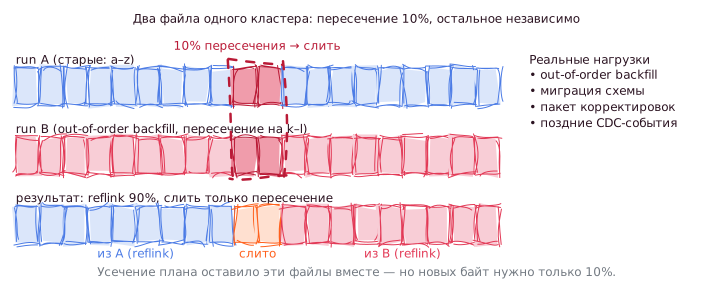
- Два run-файла в одном кластере пересечений
- Пересечение — на 10% ключей (например, k–l)
- Остальные 90% независимы — кандидат на reflink
- Нагрузки: out-of-order backfill, миграция схемы, пакетные корректировки, запоздавшие CDC
Plan trimming excludes run-files that don’t overlap at all. But within a single overlapping cluster, two files often share keys only on a narrow band. Out-of-order backfills land mostly in new regions, touching a few old ones. Schema migrations rewrite a column across the keyspace, touching every old run on a small subset of pages. Batch corrections rewrite specific transactions. In all of these, plan trimming says “compact these two files” — but 90% of the bytes don’t need to move. Stitching is the natural answer: merge the narrow overlap conventionally, reflink the rest.
18. Ловушка bloom-фильтра
- На один SSTable / run-файл приходится один bloom-фильтр, общий для всех его ключей
- После stitching набор ключей меняется, и фильтр становится непригоден
- Пересборка фильтра читает все ключи и сводит экономию I/O к нулю
- Та же проблема с page-index, min/max и MinHash-скетчем
Here’s why naïve stitching doesn’t work. A bloom filter is computed once when the file is written, and is a function of the file’s exact key set. Stitch two fragments together and the resulting file has a new key set — the old filters are invalid. To rebuild them you must read every key from every fragment, which means reading every page — exactly the I/O cost you were trying to skip. The same holds for the page index, key min/max, and any other per-file metadata. The file-level granularity of metadata is the obstacle.
19. Трёхуровневая структура: run › block › page
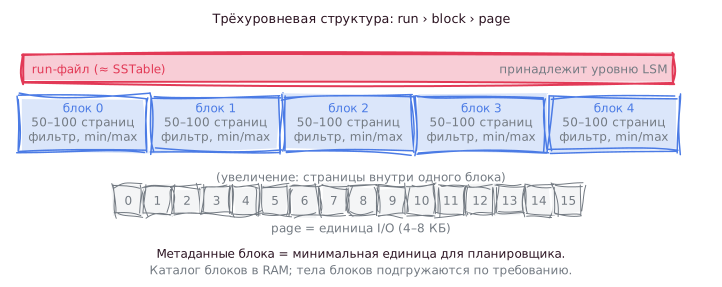
- Run-файл — SSTable, принадлежит уровню LSM
- Блок — 50–100 страниц, новый промежуточный уровень
- Page — единица I/O (4–8 КБ)
- У каждого блока свои метаданные: key min/max, ttl min/max, bloom, MinHash
The proposal. Today’s LSM files are two-level: pages and the file. Page-level metadata is too granular for compaction planning; file-level metadata is too coarse for stitching. Insert a third level between them: a block of 50–100 pages, with its own filter, key range, TTL bounds, MinHash sketch. The block is the smallest unit the scheduler reasons about, and the smallest unit that can be stitched without rebuilding metadata. The block directory stays small enough to live in RAM; the blocks themselves are paged in on demand.
20. Возможности блочной организации страниц
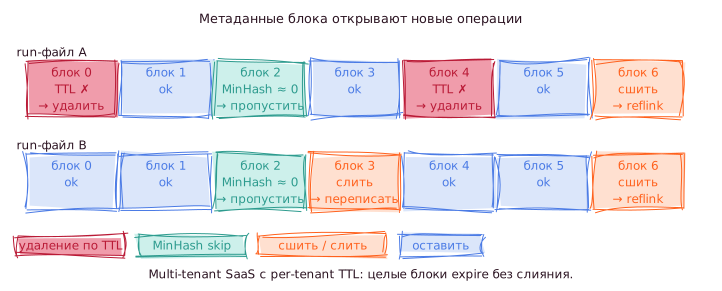
- TTL drop — целый блок удаляется по TTL без слияния
- MinHash skip — планировщик доказывает, что блоки почти не пересекаются, и пропускает слияние
- Per-block fuse8 — фильтр переживает stitching, пересборка не нужна
- Меньше RAM — каталог блоков на терабайте занимает десятки МБ
Concretely: multi-tenant SaaS with per-tenant TTL gets free expiration — when every key in a block has expired, drop the block without reading it. MinHash sketches let the scheduler compute Jaccard similarity in O(1) between two blocks; if it’s near zero, skip the merge. The fuse8 filter at block granularity survives any stitching, because stitching moves whole blocks. And the catalog of block metadata for a terabyte dataset is tens of megabytes, not hundreds.
21. Итоги
- Любая стратегия compaction балансирует три величины: read amp, write amp, space amp
- Файл, SSTable, run в пространстве (время, ключ) — выровненный по осям прямоугольник, ограничивающий кластер обновлений
- Общий план compaction объединяет драйверы shape, read-amp и space-amp
- Stitching через reflink работает, когда метаданные привязаны к блоку, а не к SSTable
The RUM triangle is the real constraint. STCS, LCS, UCS each pick a different point in it; arguing about “the best strategy” without stating the workload misses what’s actually being chosen.
Compaction reads more naturally as a 2D clustering problem in (time, key) space than as a file-merging chore. Every strategy is a different way to cover natural clusters with axis-aligned rectangles. Tight covers waste less I/O; loose covers waste more.
When the compaction plan becomes a first-class object, the scheduler can carry multiple drivers in parallel — file-shape, observed read amplification, observed space amplification — and reads themselves can tell compaction what to do. The engine adapts to the workload at runtime instead of relying on offline tuning.
The last frontier is metadata granularity. Per-file bloom filters and key indexes are a pre-reflink legacy that defeats stitching — rebuilding them costs the I/O you were trying to save. Per-block metadata fixes that, and cheap stitching, TTL drop and MinHash pruning fall out as side effects.
22. References
Теория и trade-offs
- M. Athanassoulis et al., “Designing Access Methods: The RUM Conjecture”, EDBT 2016 — daslab.seas.harvard.edu/rum-conjecture
- N. Dayan, S. Idreos, “Dostoevsky: Better Space-Time Trade-Offs for LSM-Tree Based KV-Stores via Adaptive Removal of Superfluous Merging”, SIGMOD 2018 — dl.acm.org/doi/10.1145/3183713.3196927
- N. Dayan, M. Athanassoulis, S. Idreos, “Monkey: Optimal Navigable Key-Value Store”, SIGMOD 2017 — stratos.seas.harvard.edu/publications/monkey-optimal-navigable-key-value-store
Движки
- Cassandra Unified Compaction Strategy: CASSANDRA-18397
- RocksDB Universal Compaction: github.com/facebook/rocksdb/wiki/Universal-Compaction
- Архитектура Vinyl (2018): habr.com/companies/vk/articles/358210
Indexes, filters & sketches
- T. Graf, D. Lemire, “Binary Fuse Filters: Fast and Smaller Than Xor Filters”, 2022 — arxiv.org/abs/2201.01174
- P. Ferragina, G. Vinciguerra, “The PGM-index: a fully-dynamic compressed learned index with provable worst-case bounds”, VLDB 2020 — arxiv.org/abs/1910.06169
- A. Broder, “On the resemblance and containment of documents”, 1997 — MinHash оригинал
Pointer slide — not for reading aloud. Dostoevsky formalizes the “leave the last level alone” optimization that Vinyl applies; the RUM Conjecture paper is the source for slide 8. Monkey covers bloom-filter sizing per LSM level, motivation for moving to per-block fuse8 filters. The Cassandra UCS ticket and RocksDB Universal wiki document the parametric strategies discussed in slide 10. The 2018 Vinyl article is the engine background for slides 11–15. PGM-index is here because per-block organization (slide 19) lets the engine choose a lookup structure per block — learned PGM-index for blocks with predictable key distributions, conventional indexes elsewhere.
23. Спасибо
- Блог: kostja.github.io
- Telegram: @rabid_transit
- Профильные чаты: @picodataru, @tarantoolru, @databaseinternalschat
- Подробнее: Как мы пересобрали сборку мусора в Vinyl
Questions welcome — on stage, in the hallway, or in the chats above. Everything described is open source. Vinyl ships with Picodata; the new scheduler is in 2.11.8 and Picodata 26.1.